

2027 Ford Explorer 3rd Row Seating and Interior Dimensions
The 2027 Ford Explorer seats 7 with 31.8 inches of third-row leg room and 85.8 cubic feet of maximum cargo space. That leg room figure holds steady across all trims except the Tremor, which seats 6. This page covers every interior dimension, how the cargo space stacks up, with in-stock Explorer inventory at Arrow Ford.
Third-Row Seating and Interior Space: What the Numbers Mean
The 2027 Explorer is built around usable space for real families. The third row delivers 31.8 inches of leg room, 40.9 inches of hip room, and 54.6 inches of shoulder room. Those numbers are meaningful for shorter passengers and children on longer hauls across West Texas, and the 38.9 inches of third-row head room means adults are not forced to hunch. The first two rows offer even more generosity: front-row leg room reaches 43 inches, and second-row leg room sits at 37.5 inches on the Active and ST-Line trims.
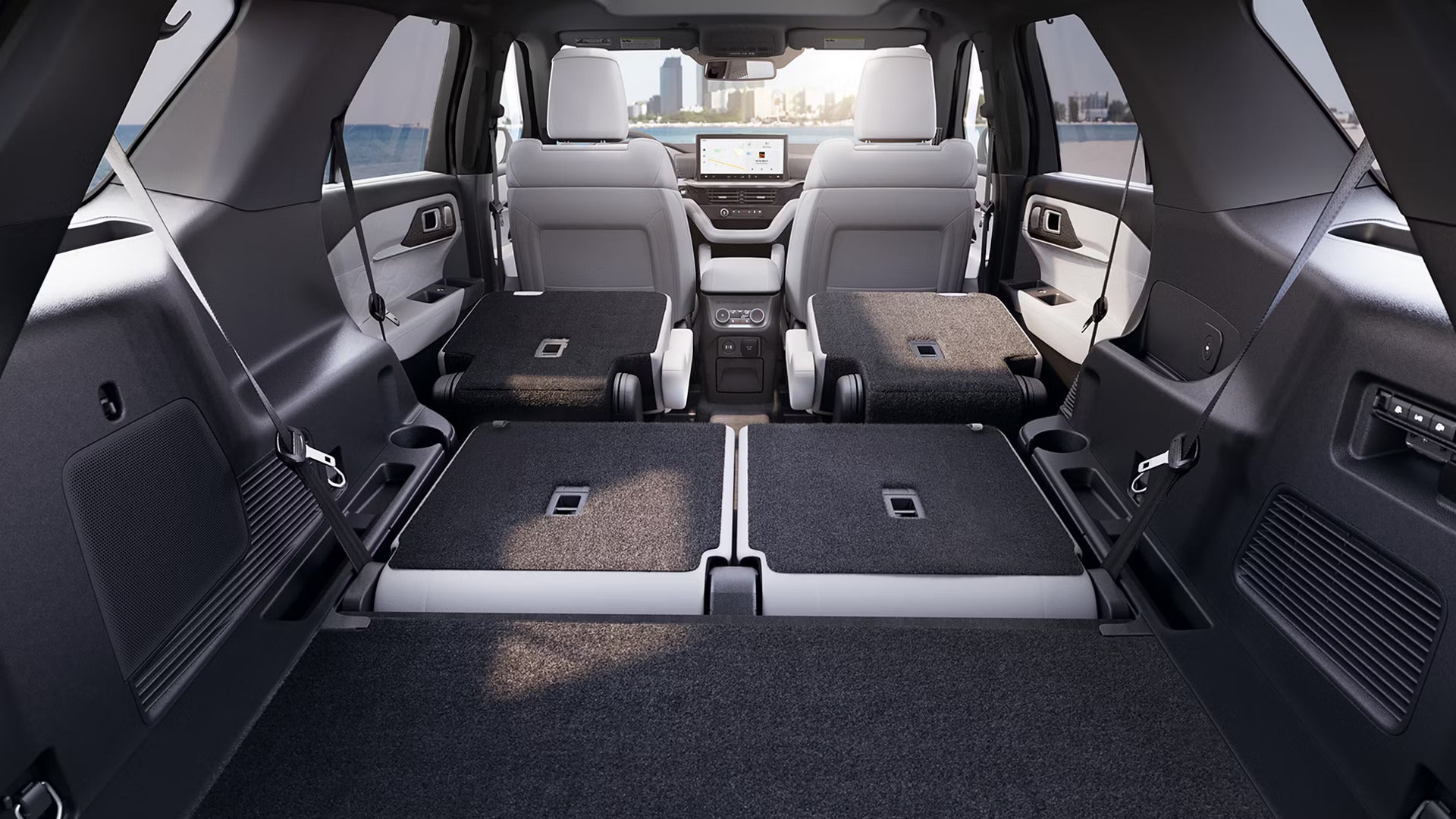
Passenger volume totals 150.3 cubic feet on Active and ST-Line, which places the Explorer at the roomier end of the three-row midsize segment. Cargo versatility is equally strong. Load 16.3 cubic feet behind the third row for everyday errands. Fold the third row and that opens to 46 cubic feet. Fold everything flat and the Explorer delivers 85.8 cubic feet of total cargo room.

How the Third-Row Space Works
Ford engineered the Explorer's third row as a genuine seat rather than an emergency perch. The 119.1-inch wheelbase creates the foundation for this layout, spreading the three rows across 198.7 inches of total length.
Getting into the third row uses a second-row seat that slides and tumbles forward. Once seated, occupants have a flat floor footwell (no propeller shaft hump interrupts the center) because the standard drivetrain is rear-wheel drive. That floor flatness directly benefits third-row riders by giving them a natural foot position rather than forcing knees upward.
The power liftgate, operable via key fob, lets a driver or parent open the cargo area hands-free when loading. The 13.2-inch center touchscreen mounts high on the dash, keeping it from intruding into front-row knee space.
Across the Trims: Seating and Dimension Differences
Seating capacity and some interior dimensions shift by trim. Here is how they break down:
| Trim | Seating | Ground Clearance | Passenger Volume | Max Cargo | Key Notes |
|---|---|---|---|---|---|
| Active | 7 | 7.6 in | 150.3 cu ft | 85.8 cu ft | Base interior dimension profile for the lineup. |
| ST-Line | 7 | 7.6 in | 150.3 cu ft | 85.8 cu ft | Uses the same interior dimension profile as Active. |
| ST | 7 | 7.8 in | 149.5 cu ft | 85.3 cu ft | Standard 3.0L EcoBoost Twin-Turbo V6. |
| Tremor | 6 | 8.7 in | 149.5 cu ft | 85.3 cu ft | Only trim with 6-passenger seating. Standard AWD. Wider body stance trims interior volume slightly. |
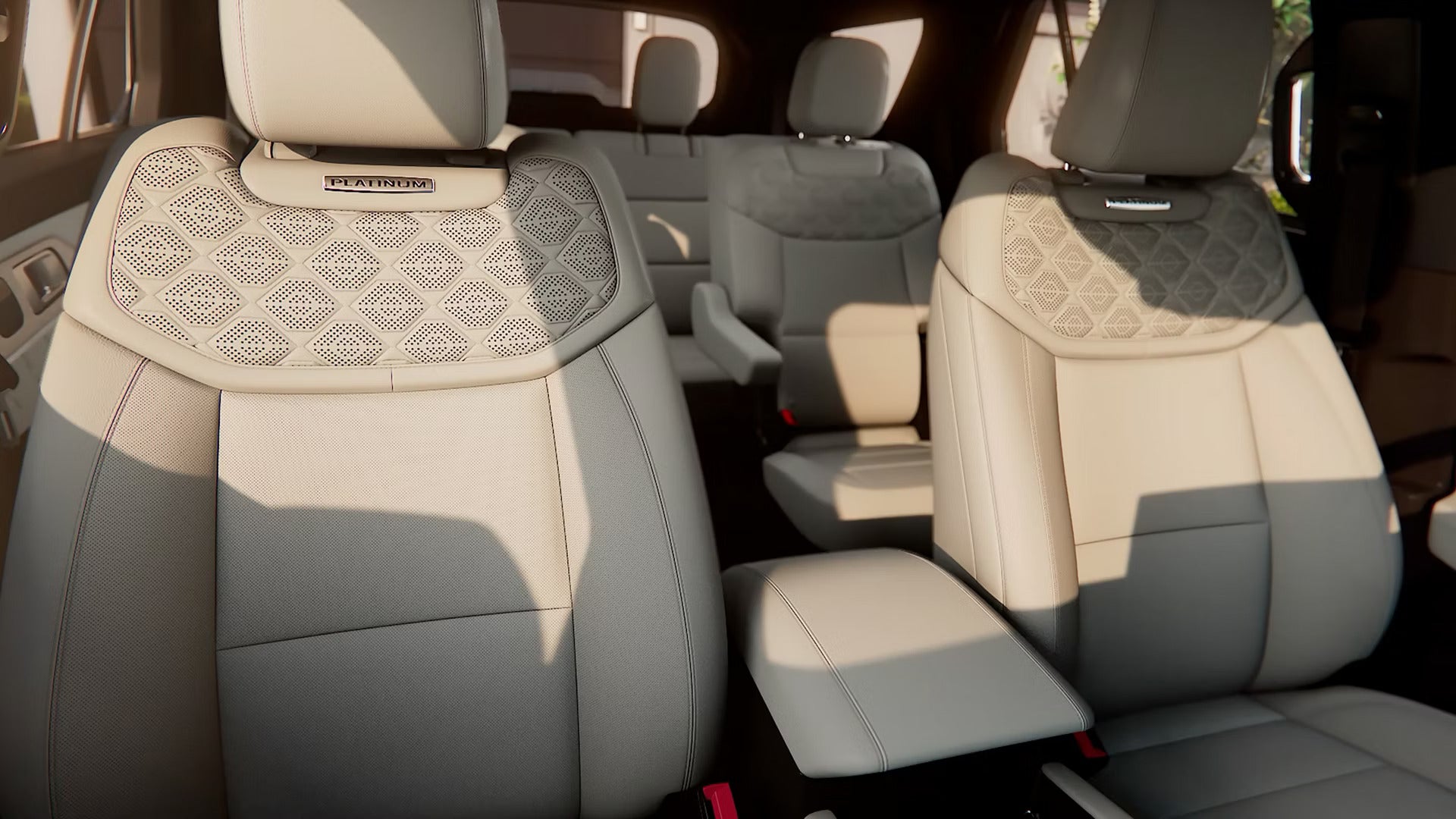
| Platinum | 7 | 8.3 in | 143.8 cu ft | 85.3 cu ft | Optional moonroof reduces first-row head room to 38.9 in and second-row head room to 38.2 in. |
One dimension that stays constant regardless of trim: third-row leg room at 31.8 inches and third-row head room at 38.9 inches.
Real-World Benefit for Families and Travelers
Families heading out of Abilene on a road trip carry gear, car seats, and passengers who all compete for the same cubic footage. The Explorer resolves that competition with a tiered cargo system. A loaded third row still leaves 16.3 cubic feet behind it, enough for a full stroller or a week's worth of luggage for two. Child Seat Anchors (LATCH) are standard, and child door locks on the rear doors give parents control without extra hardware.
For school runs and weekend sports, the 46 cubic feet behind the second row handles lacrosse bags, soccer gear, or a full load of camping equipment. The cargo area sits at a practical loading height, and the standard power liftgate means a parent carrying a child can open the hatch without setting anyone down.
Ford's Co-Pilot360 driver-assist suite runs standard across all trims, pairing with the 12.3-inch digital instrument cluster so the driver tracks navigation and safety alerts without looking away from the road. The 5G modem and Wi-Fi hotspot serving up to 10 devices (up to 50 feet) keeps rear-seat passengers connected on longer trips. For the third row specifically, that connectivity is the difference between a quiet drive and a smooth one.
The B&O Sound System by Bang & Olufsen fills all three rows. The standard 10-speaker setup reaches the back seats without distortion, and the optional 14-speaker 980W upgrade ensures the third row hears the same quality as the front.
How It Compares to Rivals
The Explorer's 31.8 inches of third-row leg room and 85.8 cubic feet of maximum cargo are competitive benchmarks in the midsize three-row segment. Several rivals in this class offer third rows with leg room figures in the high-20-inch range, which pushes the Explorer's number to the favorable end without requiring buyers to step up to a full-size SUV. The 150.3 cubic feet of passenger volume on Active and ST-Line trims confirms the Explorer is not trading passenger comfort for cargo flexibility; it delivers both in the same interior.
The available 3.0L EcoBoost Twin-Turbo V6 on the ST, Tremor, and Platinum adds power without reducing interior dimensions, which is an important distinction: the cabin layout does not change between engine choices.
See the 2027 Ford Explorer at Arrow Ford in Abilene
The 2027 Ford Explorer brings 31.8 inches of third-row leg room, 85.8 cubic feet of total cargo room, and genuine 7-passenger utility to every drive. Arrow Ford in Abilene stocks multiple Explorer trims so you can compare the cabin in person and choose the right seating configuration for your family.
Frequently Asked Questions
How much leg room does the 2027 Ford Explorer third row have?
The 2027 Explorer third row has 31.8 inches of leg room. That measurement applies to the Active, ST-Line, ST, and Platinum trims. The Tremor is configured as a 6-passenger vehicle.
Does the 2027 Ford Explorer have a flat cargo floor?
Yes. With the third row folded, the Explorer opens to 46 cubic feet behind the second row. With all rear rows folded, maximum cargo volume reaches 85.8 cubic feet on Active and ST-Line, and 85.3 cubic feet on ST, Platinum, and Tremor trims.
How many passengers does the 2027 Ford Explorer seat?
Most trims seat 7 passengers across three rows. The Tremor is the exception, seating 6. All trims include Child Seat Anchors (LATCH) and child door locks as standard.
Does the optional moonroof affect head room in the 2027 Explorer?
On the Platinum trim with the available moonroof, first-row head room reduces to 38.9 inches (from 40.7) and second-row head room reduces to 38.2 inches (from 40.5). Third-row head room remains at 38.9 inches.
What is the third-row head room in the 2027 Ford Explorer?
Third-row head room is 38.9 inches across all trims, regardless of the moonroof option or trim level.
How much cargo space is behind the 2027 Explorer's third row?
The 2027 Explorer holds 16.3 cubic feet of cargo directly behind the third row with all seats in use.
Does the 2027 Explorer have a power liftgate?
Yes. A power liftgate is standard on the 2027 Explorer and can be opened or closed via the key fob.
Which 2027 Explorer trim has the most ground clearance?
The Tremor leads with 8.7 inches of ground clearance. The Platinum follows at 8.3 inches, the ST at 7.8 inches, and the Active and ST-Line each at 7.6 inches.

Although every reasonable effort has been made to ensure the accuracy of the information contained on this site, absolute accuracy cannot be guaranteed. This site, and all information and materials appearing on it, are presented to the user "as is" without warranty of any kind, either express or implied. All vehicles are subject to prior sale. Price does not include applicable tax, title, license, and $225 documentation fee. ‡Vehicles shown at different locations are not currently in our inventory (Not in Stock) but can be made available to you at our location within a reasonable date from the time of your request, not to exceed one week.